Starting with the hardware.
My early research experience involved assembling, testing, and calibrating external-cavity diode lasers and their supporting electronics. It was hands-on work with optical alignment, diffraction gratings, and laser systems used in atomic physics experiments.
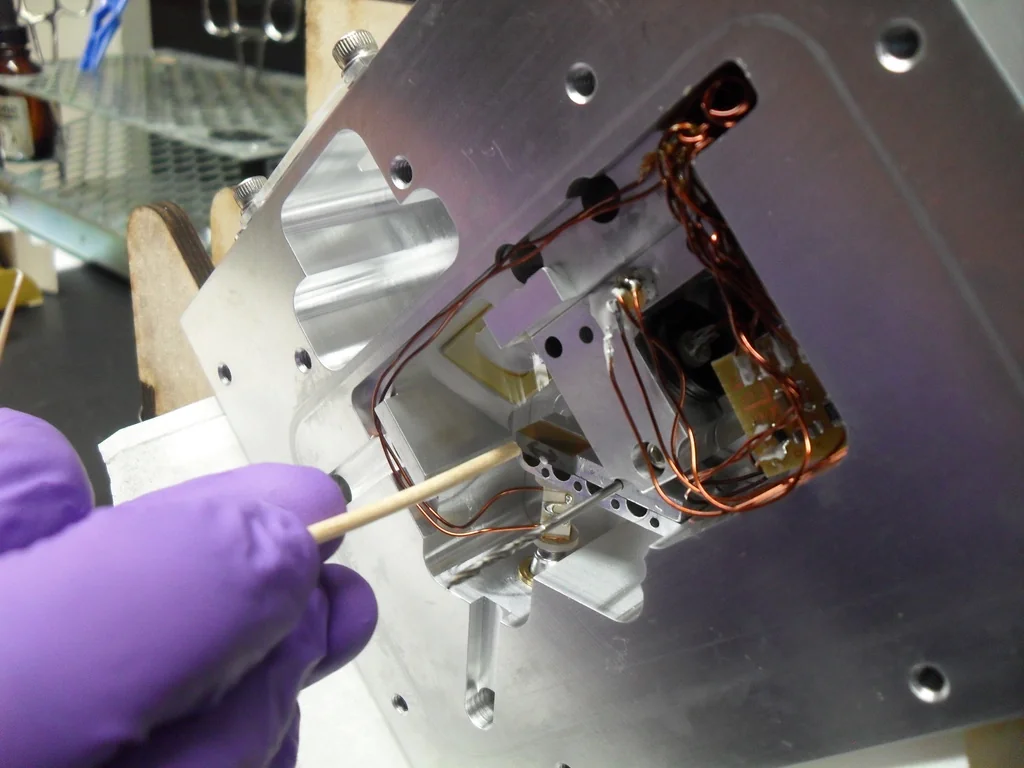
Making an existing system useful again.
I also debugged, calibrated, and documented a custom interferometric wavemeter, including changes to its control software written in C. That work meant moving between the optical system, electronics, and software to understand the behavior of the complete instrument.
Alongside the research, I helped mentor incoming undergraduate interns and younger students working in the laboratory.
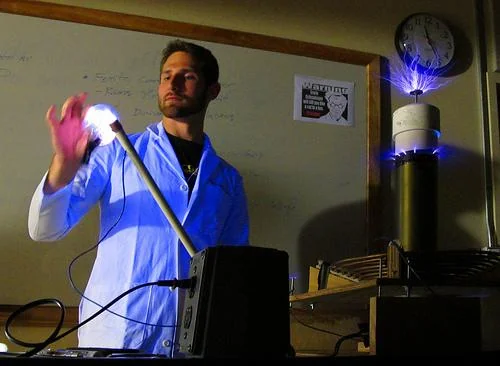
A foundation for later work.
These projects established a pattern I have followed since: learn how the measurement works, investigate where its behavior departs from expectations, and make the system easier for the next person to operate and understand.
Related publication: E. C. Cook, P. J. Martin, T. L. Brown-Heft, J. C. Garman, and D. A. Steck, High passive-stability diode-laser design for use in atomic-physics experiments, Review of Scientific Instruments (2012).